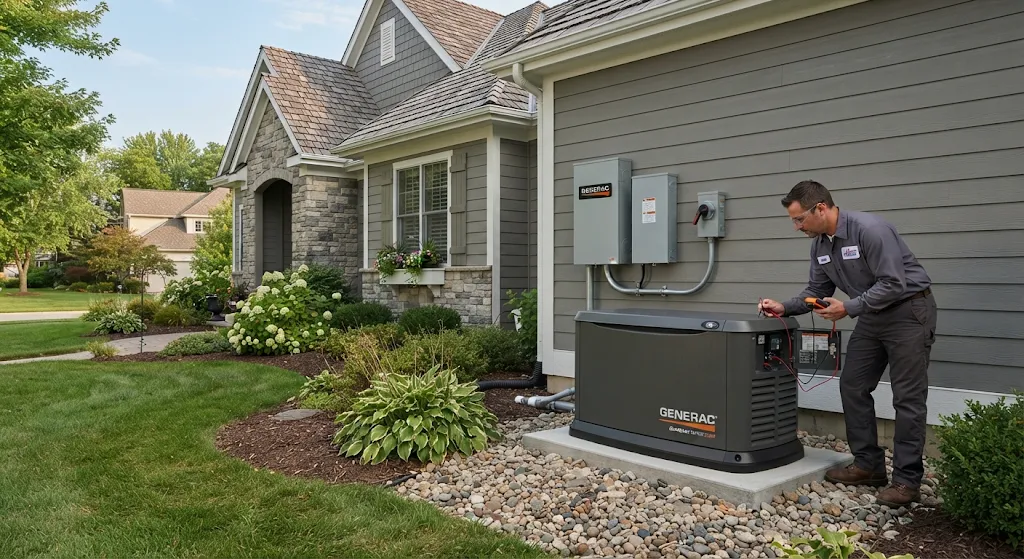
Level 2 EV Charger Installation in Frederick, MD
Rapid, reliable 240-volt Level 2 electric vehicle charging in your garage or driveway. Connect with independent licensed electrical contractors in Frederick for dedicated circuits and load management.
Accelerating Home Charging for Electric Vehicles in Frederick
As adoption of electric vehicles accelerates throughout Maryland, property owners in Frederick are recognizing the limitations of standard 120-volt Level 1 trickle charging. Recharging a modern EV battery using a basic wall outlet delivers only 3 to 5 miles of driving range per hour—often requiring 30 to 50 hours for a complete battery charge.
Frederick sits in the Catoctin mountain valley where historic masonry homes along Market and Patrick Streets meet rapid suburban growth in Tuscarora and Ballenger Creek. Winter mountain ice storms frequently challenge overhead Potomac Edison lines, while downtown brick homes require specialized non-destructive cable routing.
Installing a dedicated 240-volt Level 2 Electric Vehicle Supply Equipment (EVSE) charging station delivers between 25 and 45 miles of range per charging hour, replenishing an empty battery fully overnight while you sleep. However, because EV chargers operate at continuous high electrical loads (often 32A to 48A continuously for 6+ hours), safe installation requires strict load calculations, appropriate wire gauge selection, and municipal electrical permitting in Frederick County.
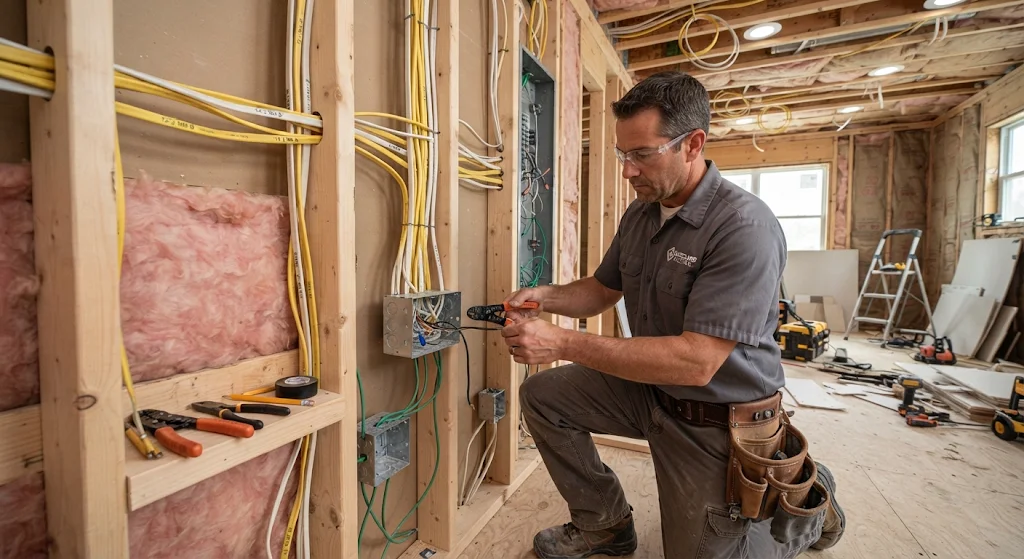
Dedicated EVSE wiring path in Frederick
Load calculations, branch run installation, and municipal inspection certification.
Hardwired Charging Stations Versus NEMA 14-50 Receptacles
Independent electricians typically configure Level 2 charging through one of two primary installation approaches:
- Hardwired Wall Stations (Recommended for Maximum Speed): The charging unit (such as a Tesla Wall Connector or ChargePoint Home Flex) is wired directly into a metal conduit or junction box on a 50A or 60A dedicated branch circuit. Hardwiring permits continuous charging speeds up to 48 amperes (11.5 kW) and eliminates the need for GFCI receptacle breakers, which are prone to nuisance tripping with certain EV onboard computers.
- NEMA 14-50 Plug-In Receptacles: The charger plugs into a heavy-duty industrial-grade 240V 50A outlet. Under the current National Electrical Code, plug-in EV receptacles installed in garages or outdoors must be protected by a GFCI circuit breaker, capping maximum continuous vehicle draw at 40 amperes.
Ready to Charge Your EV at Home in
Connect with participating independent electricians in Frederick County for load assessments and charger installation.
Free referral intake. Installation quotes and load evaluations are performed directly by independent contractors.
Electrical Load Calculation & Service Panel Capacity
Before adding a continuous 40A to 60A electrical load to a home in Frederick, an independent master electrician conducts a formal NEC Article 220 load calculation. In older neighborhoods featuring historic 19th-century downtown brick residences and modern suburban developments across Ballenger Creek, service panels may already be operating near maximum capacity.
If your existing service panel cannot accommodate the additional continuous load of a Level 2 charger, the electrician can advise you on:
- Upgrading to a 200A Service Panel: Modernizing the main service to eliminate capacity limitations permanently.
- Smart Energy Management / Load-Shedding Devices: Installing an intelligent EV energy management system (such as a DCC electric vehicle energy manager) that automatically pauses EV charging if whole-home power draw approaches peak panel thresholds.
Permit & Code Compliance in Frederick County
Installing an EV charger circuit in Frederick is considered a major electrical branch addition requiring an electrical permit from City of Frederick Building Department or Frederick County Permits & Inspections. An independent licensed master electrician pulls the permit, verifies conductor sizing (e.g., using 6 AWG copper for 50A or 4 AWG copper for 60A circuits), and schedules final municipal inspection to maintain homeowners insurance validity.
Explore Associated Electrical Upgrades in Frederick:
- Does your service panel need an upgrade? Review Panel Upgrades in Frederick.
- Troubleshooting existing garage circuits? See Electrical Repair in Frederick.
- Protecting against unexpected grid failures? Explore Generator Installation in Frederick.
Frequently Asked Questions About EV Charger Installation in Frederick, MD
In some homes with gas heating and limited appliances, an Article 220 load calculation may allow a 30A or 40A charger circuit on a 100A panel. However, if your home features central air conditioning, an electric water heater, or an electric dryer, upgrading to 200A service or installing an EV load-shedding device is typically required.
Hardwiring supports faster 48A continuous charging speeds on a 60A circuit and avoids nuisance tripping caused by GFCI breakers interacting with onboard vehicle electronics. Plug-in receptacles are restricted to 40A continuous draw and mandate GFCI breaker protection under NEC code.
Yes. The Maryland Energy Administration (MEA) and regional electric utilities (such as FirstEnergy (Potomac Edison)) periodically offer residential EVSE rebates covering a portion of equipment and installation costs. Licensed independent electricians provide itemized invoices required for rebate applications.
Yes. Weatherproof outdoor chargers featuring NEMA 3R or NEMA 4 ratings are specifically engineered to withstand rain, snow, and freezing mid-Atlantic winter temperatures. The electrician installs rigid conduit and sealed junction fittings.
Call WATT911 at (888) 605-9975. Our intake team matches your request with participating independent electrical contractors in Frederick County experienced in EVSE load calculations and code-compliant installations.
Under the NEC, continuous loads require conductors rated at 125% of load amperage. A 48A charger on a 60A breaker mandates 4 AWG copper conductors (or 6 AWG THHN copper in conduit under the 75°C terminal column), ensuring safe, cool operation during multi-hour charging sessions.