Electrical Repair & Troubleshooting in Bowie, MD
Pinpoint circuit diagnostics, faulty breaker replacement, and electrical troubleshooting for residential and light commercial properties in Bowie. Connect with independent local electrical contractors.
Diagnosing Electrical Faults & Malfunctions in Bowie
Electrical malfunctions disrupt daily routines, damage sensitive electronic appliances, and pose severe thermal fire risks if left unresolved. In Bowie, where properties encompass 1960s Levitt & Sons planned neighborhoods featuring original 100A services, split-levels, and contemporary master-planned communities, identifying the root cause of an electrical problem requires calibrated diagnostic testing rather than guesswork.
Bowie's historic Levittown heritage in Belair encompasses thousands of 1960s tract homes with original 100-amp panels operating near capacity. Independent contractors navigate Prince George's County DPIE plan reviews for panel expansions, EVSE additions, and standby generators.
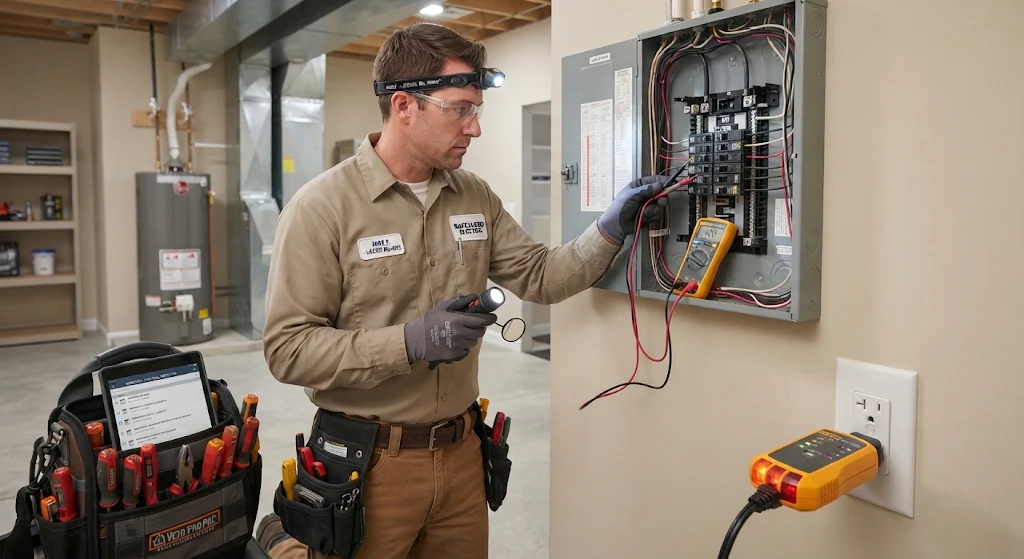
Whether you are dealing with a breaker that trips instantly upon reset, receptacles that feel unusually warm to the touch, or buzzing noises inside an electrical wall box, qualified independent contractors utilize advanced diagnostic tools—including insulation resistance megohmmeters, digital clamp meters, and infrared thermography—to inspect circuit conductors and terminal connections safely.
Independent diagnostic professionals in Bowie
WATT911 routes your electrical repair inquiry to independent contractors who evaluate and repair your system directly.
Common Symptoms Demanding Immediate Professional Investigation
Circuit issues rarely resolve on their own. Homeowners in Bowie should remain vigilant for the following key indicators of electrical degradation:
- Repetitive Circuit Breaker Tripping: While a breaker that trips occasionally may indicate an overloaded circuit (such as running a microwave and space heater simultaneously), a breaker that trips repeatedly without a significant load suggests an active short circuit, ground fault, or failing thermal-magnetic trip mechanism.
- Flickering or Dimming Lighting: Illumination that fluctuates when major appliances like central air conditioners or clothes dryers cycle on typically points to high-resistance loose neutral connections or inadequate service feeder capacity from Baltimore Gas and Electric (BGE) / Pepco.
- Burning Odors or Scorch Marks: Acrid plastic odors emanating from wall switches, outlets, or the service enclosure indicate active arcing, overheated terminal lugs, or degraded insulation—a situation demanding immediate circuit de-energization.
- Non-Functional GFCI or AFCI Receptacles: Ground Fault Circuit Interrupters (GFCIs) protect personnel against electrocution in moisture-prone zones, while Arc Fault Circuit Interrupters (AFCIs) detect hazardous series or parallel arcing behind drywall. If a test/reset button fails, the internal electronic sensing circuitry is compromised.
- Humming or Buzzing Panels: Audible buzzing from breaker tabs or bus connections signifies harmonic distortion, loose terminal torque, or mechanical vibration from arcing contacts inside aging panel enclosures.
- Intermittent Power Loss in Specific Rooms: Random outages across half a room without any breaker tripping often indicate back-stabbed push-in receptacle connections that have thermally loosened inside junction boxes.
Need Professional Electrical Troubleshooting in
Connect with participating independent electricians servicing Prince George's County. Call our network intake line to discuss your diagnostic needs.
Free intake routing. Diagnostic rates are determined directly by independent contractors.
Safe Steps to Take Before the Electrician Arrives
If you detect an electrical irregularity in your Bowie property:
- De-energize the Affected Circuit: Locate your main electrical panel and switch the relevant branch breaker to the "OFF" position. If you are unsure which breaker controls the circuit, or if the main breaker is warm, shut off the main disconnect if safe to do so.
- Unplug Sensitive Equipment: Disconnect televisions, computers, and medical equipment from circuits exhibiting voltage fluctuations to protect delicate microprocessors from damaging surges.
- Never Force a Breaker: If a breaker snaps back to the tripped center position, do not hold it down with tape or force it. Doing so bypasses the safety trip mechanism and can cause conductors to overheat inside concealed walls.
- Check for Physical Heat: Feel the outer cover of the outlet or switch plate. If it feels hot to the touch, avoid using adjacent receptacles and keep flammable materials clear.
Comprehensive Diagnostic Methodologies Employed by Licensed Electricians
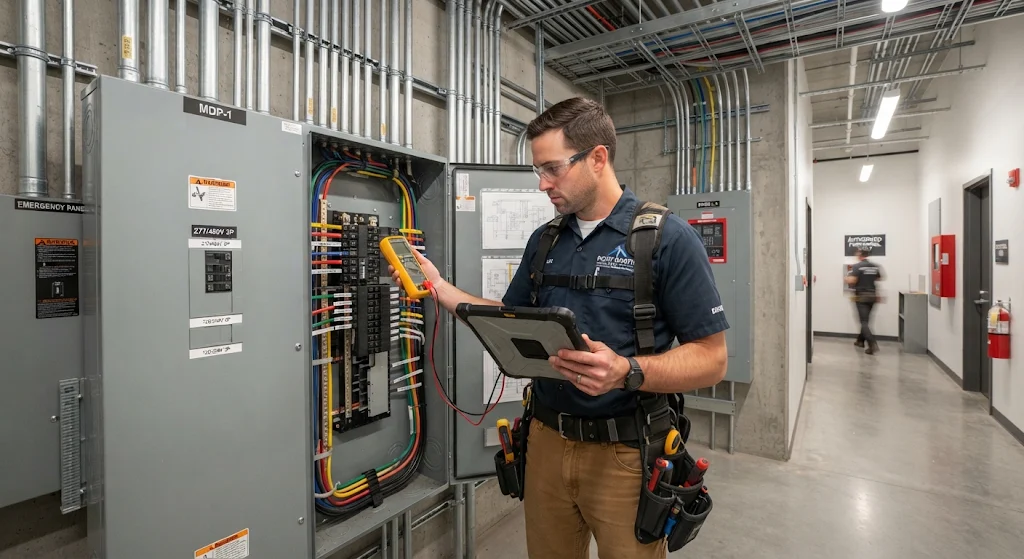
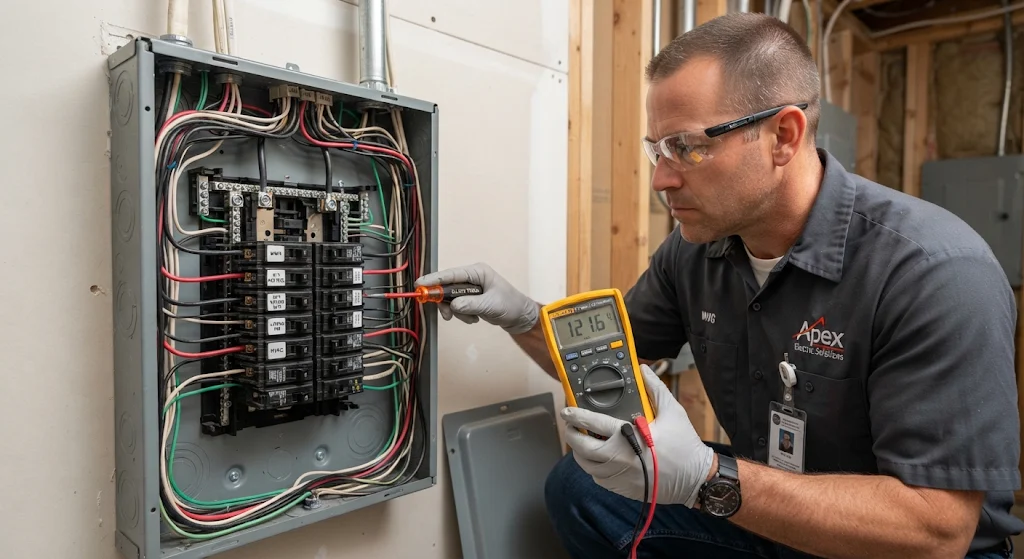
When an independent licensed electrician arrives at your Bowie property, they employ systematic testing protocols:
- Megohmmeter Insulation Testing: Applies calibrated high-voltage DC to measure insulation integrity between hot, neutral, and ground conductors without damaging the circuit, locating invisible breakdowns inside walls.
- Thermal Imaging Scans: Infrared cameras detect subtle heat signatures at breaker stabs, neutral bars, and junction splices, pinpointing high-resistance connections before they ignite drywall.
- Voltage Drop Analysis: Measures line voltage under simulated loads to determine if long wire runs or corroded utility service drop cables from Baltimore Gas and Electric (BGE) / Pepco are causing appliance brownouts.
- Ground Loop & Fault Path Impedance: Verifies that grounding electrode conductors running to outdoor grounding rods or metallic water lines have low electrical resistance, ensuring fault currents safely trip breakers.
Permit & Code Considerations in Prince George's County
Minor direct repairs (like-for-like device replacements such as swapping a standard switch) typically do not require permits. However, replacing damaged branch circuit wiring runs, relocating service equipment, or installing new dedicated circuits in Bowie must comply with Prince George's County Department of Permitting, Inspections and Enforcement (DPIE) standards. Licensed independent master electricians handle all code compliance.
Explore Related Electrical Services in Bowie:
- Frequent overload tripping? Consider an Electrical Panel Upgrade in Bowie.
- Experiencing persistent wiring failures in older walls? Read about House Rewiring in Bowie.
- Planning clean vehicle charging? Review EV Charger Installation in Bowie.
Frequently Asked Questions About Electrical Repair in Bowie, MD
A breaker that trips instantly is actively detecting a 'dead short' (a direct hot-to-neutral or hot-to-ground connection) or a severe ground fault. Forcing the handle can spark a fire. Leave the breaker OFF and have an independent electrician isolate the short circuit.
Motors draw high inrush current upon startup. If lighting circuits dim significantly, it may indicate undersized branch wiring, a loose neutral bus connection in the service panel, or voltage drop on the service drop line managed by Baltimore Gas and Electric (BGE) / Pepco.
When you call (888) 605-9975, our intake team identifies your repair needs and matches your request with participating independent electrical contractors in Prince George's County. If an available contractor operates in your area, your information is referred so they can contact you directly.
Because troubleshooting requires active hands-on meter diagnostics to identify concealed faults behind walls or underground, independent contractors typically charge a standard diagnostic evaluation fee. The contractor will disclose their diagnostic rates directly before dispatching.
If an outlet has a worn receptacle contact or loose terminal screw, the device itself can be replaced easily. However, if the underlying conductors are scorched, undersized, or lacking an equipment ground wire, running a new dedicated cable back to the panel may be required under Maryland electrical codes.
Yes. If an oversized breaker (e.g., 20A) was installed on undersized 14-gauge wire, or if high-resistance arcing occurs at a loose terminal, heat can build up to combustible levels without drawing enough total amperage to trigger the breaker's magnetic trip mechanism.